October 24, 2026 6:30 pm
GEOFFREY: Why, you chivalric fool—as if the way one fell down mattered.
RICHARD: When the fall is all there is, it matters.
credit: -- James Goldman, The Lion in Winter, 1966 / Eric Ries, Incorruptible, 2026
GEOFFREY: Why, you chivalric fool—as if the way one fell down mattered.
RICHARD: When the fall is all there is, it matters.
credit: -- James Goldman, The Lion in Winter, 1966 / Eric Ries, Incorruptible, 2026
credit: 罗振宇
credit: Friedrich Nietzsche
Nietzsche has some of the most biting quotes as a non-believer and it’s truly a joy to behold.
credit: Oscar Wilde
A Chinese character that I think captures Oscar Wilde’s vibe rather well is 痞. Have yet to find its counterpart in English, maybe it’ll come to me someday.
The fact that there’s actually a horizontal scrubber at the bottom! T.T
Nothing inspires gratitude and the desire to pay forward like the encounter with the many delightfully-crafted open source software. (What do you mean people poured their heart & soul into it and I’m enjoying it, for free?!)
And it’d be remiss not to give due recognition to the work by way of mentioning it: this is gitui, for viewing diffs in the terminal.
沉默的螺旋:如果你选择沉默,那么那些原本支持你观点的人,想帮你发出声音的人,他们会觉得孤单没有依靠,所以他会更倾向于选择沉默。
所以什么叫作沉默的螺旋呢,意思就是,你的沉默,不是你一个人的沉默。你的沉默,是一个黑洞,一旦开启,真相就再也逃不出这个漩涡。
credit: 邱晨
马东老师说过一句话我非常喜欢,叫作
“被误解是表达者的宿命“
但是我想说的是,澄清可能就是表达的定义。
credit: 邱晨/马东
“生活啊 好比那黑夜里漫长的路 走过的人 他从不说出来“
他为什么不说
因为他走之前 无人可说
他走过了 也就不用再说了
credit: 臧鸿飞/野孩子
As the discourse will inevitably shift from the morality of AI to what constitutes its ethical use- (I’m not much of an optimist when it comes to resisting the march of progress)
This is one use of AI in art I can get behind

Download 20,000+ free seamless PBR textures for Blender, Unreal and Unity. Tileable PNG/WEBP materials with 1K-8K maps and 3D preview.
I’m aware there are contentions surrounding the ethicality of the sourced datasets (which is a topic that requires much more research on my part before I can even form an informed opinion).
Yet, in terms of usage and application, this is a sensible demonstration of what I would consider an ethical AI-augmented workflow - supporting the worker by taking away real pain points in their workflow (I’d be surprised to know if any artists are passionate about creating textures) instead of aiming to eliminate the people themselves.
I know there will be businesses that balk at such statement (“but margins! but efficiency!”). But guess what, whatever these businesses are after is also the natural outcome without consciously aiming to replace people to cut capital cost. Workers hate bloated organization as much as the business itself, so if they could shrink team size because they could get more done by themselves, you bet they would without even making this some manager’s KPI. The difference really comes down to whether the business respect its existing workers enough to consider them, hence approach this wave of technology adoption from the perspective of giving support, or merely see them as disposable. The former gives morale, solidarity, and the possibility of having your expectations exceeded by passionate workers; the latter gives you resentment.
I wonder if the talk around AI will ever shift from “what do businesses need to 10x their output” to “what do workers truly need from AI to become capable of helping businesses 10x their output”. People and gains should both be given consideration (we are not some naive idealists now, are we?), but it’s long due to let people come before business goals as the priority of focus. Because this is the only approach through which the productivity gain by AI could become meaty and real, in the sense that it would be improvement that survives long-term scrutiny and creates actual meaningful economic value, not some house of cards propped up by short-sighted greed that’s threatening to collapse the economy if left to its own device on the alternate trajectory.
In this sense, “ethical use of AI” really means doing what’s aligned with the long-term prosperity of humanity as a whole. The tension has never been one between some fuzzy good will and logical business needs. It’s one between what we are immediately tempted to do with the tool, versus acknowledging the need to moderate such temptation such that the tool’s benefits can be reaped sustainably instead of fallen victim to its immense influence.
晚安 自由女神飘到华尔街
我们在甲板上摸到 杜拜塔顶的塔尖
晚安 海豚跃出西藏的屋檐
原来幻想中的这天 会比幻想更唯美
Oh and how can I forget, not an exaggeration to say this is literally the awakening of my literature appreciation:
One moment I was still merely going through the motion of memorizing poems for dictation tests; the next I’m suddenly understanding what language classes have been trying to knock into us for years.
If I have to describe my most overwhelming impression of this poem in one word, it would be lean. The first 3 sentences build up a scene with nouns and nouns only. The entire poem has only two verbs (one of them being a copular even). Continuing on the quality of leanness, the punchline, into which somehow the entirety of the theme managed to be condensed, illuminates it in one swift finishing sentence after a short break of structure on the fourth line. How satisfying is that?
I suppose it also helps that all the nouns in the poem are concrete, with the sole exception being the last word. The contrast gives the poem a spike of dreamy, echoing quality at the very end, such that it reverberates long after its impactful end.
(I admit I’m having a little too much fun glazing it)
枯藤老树昏鸦,
小桥流水人家,
古道西风瘦马。
夕阳西下,
断肠人在天涯。
— 《天净沙 · 秋思》
One trope of songs I find extremely satisfying is one where the songwriter steps out of their own experiences, toys with a character they have in mind, and writes the exploration in first-person.
They give me a strong sense of the artists having fun with their craft, and I suppose there’s always a certain pleasure to be derived from watching talents play & challenge themselves.
"YSK that I'm using you as rebound"
Powerful industrial figure manipulating innocent starlets
"Be unhealthily parasocially attached to me"
Classic, need say more?
A vampire's lament
Honorable mention:
If I were the rumored man-obsessed psycho
Favorite Singapore-origin Chinese song. Pleasantly surprised by the bite in it and have liked it since
小孩不笨2 - 孤军作战Yes, the song do be giving edgelord, but you gotta acknowledge a sick sass when you see one
But if he drops my name, then I owe him nothing
And if he spends my change, then he had it comin’
Taylor’s good at capturing these quiet chafes.
The kind that tend to make people second-guess themselves the most because there isn’t any visible, intentional wrongdoing, but devastating nonetheless. Really the surest way to kill someone inside is by consistently denying them the consideration they deserve
And because this type of hurt is usually more challenging to articulate, I find her giving words to it empowering and… kind
Tolerate. What a packed word. My heart breaks for the narrator
I know my love should be celebrated
But you tolerate it
I didn’t expect to like it at first. It’s one of the songs that have slowly grown on me.
I like that there’s fight and anger in the song’s depicted process of getting sadness out of one’s system. And the use of rain as an imagery to invoke tears which somehow doesn’t feel cliche, because of how it manages to make the comparison between the near-choking experience of crying (water coming out) and drowning (water going in) work.
imo it’s the song that does the best at capturing the feeling of a deep, guttural cry that I’ve come across
So I punched a hole in the roof
Let the flood carry away all my pictures of you
The water filled my lungs, I screamed so loud
but no one heard a thing
Rain came pouring down, I was drowning
(but) That’s when I could finally breathe
It’s always the smart people who turn out to be the staunchest humanists
This question doesn’t contribute to a deep understanding of mathematics, nor is it particularly difficult (when compared to mathematical research). Rather, the value of this question lies in the fact that it warmed my heart when I solved it, and it still warms my heart more than a year later. Like a good book or a touching song, the value here is human. Call me humanist, but I truly believe that the value of this question, as a mathematical discovery, exceeds that of the average PhD thesis.
— Aviv Tavor
It’d be all lyrics for now until I am motivated enough to load in my screenshots…
When they found a better planet
Only the gentle survived
Here’s another one I enjoy a lot:
有没有那么一滴眼泪 能洗掉后悔
化成大雨 降落在回不去的街
再给我一次机会 将故事改写
还欠了他一生的 一句抱歉
有没有那么一个世界 永远不天黑
星星太阳 万物都听我的指挥
月亮不忙着圆缺 春天不走远
树梢紧紧拥抱着树叶 有谁能听见
有没有那么一朵玫瑰 永远不凋谢
永远骄傲和完美 永远不妥协
为何人生最后会像一片纸屑
还不如一片花瓣 曾今鲜艳
I think romance is typing your biggest heartache into a search engine’s search bar, when it doesn’t seem like your immediate surroundings would be able to offer any consolation, then landing on a blog or a forum post dated 15 years ago, with 1 or 2 likes, which for some reason is everything you need to hear at the moment to feel ok again.
It never ceases to amaze me: how the internet has preserved a stranger’s heartache so it crosses time and space to reach us in a time we feel most alone to remind us we never truly were.
Life’s funniest revelation to me is that I never knew I wasn’t practicing empathy until I finally experienced what it meant to “decenter” myself. All the time I had thought I was; but I really wasn’t.
Here’s to the masterpiece (I’m calling it nothing less) that taught me how.
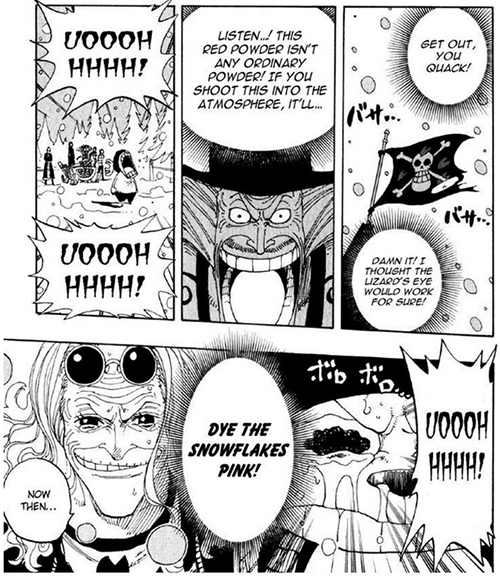
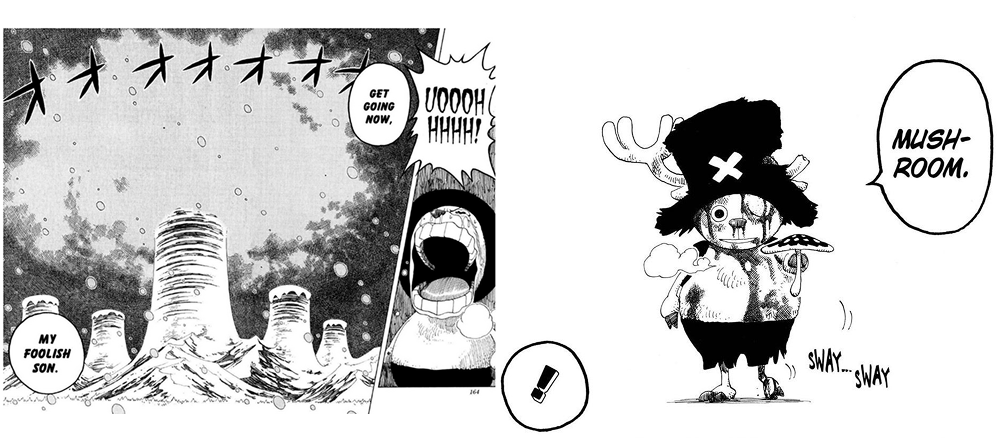
There’s this saying that “the fastest way to disappointment in life is to expect everyone to have the same values and character as you”. Which I agree wholeheartedly. I guess that’s really the missing piece when it comes to how I think about advocacy and campaigning. The belief in the non-futileness in advocacy essentially lies in the faith that there are some universally common human traits that would make others wanting to take action once we pinpoint or give visibility to the deficiency in the current affairs. But if that’s a false foundation to based upon - not everyone shares the same values, and unfortunately based on my own experience, bigotry is more common than rare, how should I go about thinking about this? I suppose that means going into each pitch with the awareness that it might never land if my audience isn’t aligned. Perhaps pitching is less about persuasion and changing people’s mind (though I have the basic obligation to make proper argument to respect my listener’s time), but more about discovering alignment and always ready to move on when there’s none. It’s actually more of a number game - pitching to as many organizations as possible, than a persuasion activity
You know, when I was fresh out of university I realized the greatest gap in my English mastery is that I struggle with articulating abstract ideas. The first book that actually got me thinking like, “damn, there’s some phrases here I could use” is Joan Didion’s Why I Write. Her writing style, perhaps typical of American writers of her era, is very incisive, it’s as if at her times the measure of literary achievement is not in the “flowery”, but by who can reproduce human experience in words in the most specific and concise manner. Specific, as in the writing is sharp and calls out a single shade of nuance amongst the overlapping mix of human experiences. This specific shade of grief, not this, nor that. Concise, as in each word is there for a purpose. The writing is tight, the choice of word has been deliberated over and over extensively so that there’s only content and no room for fat. Now fast forward to 3 or 4 years later, I believe I still have a long way to go in this area
postscript: I like this one because articulating subjective preferences has always been challenging for me
I have an epistemology question that have plagued me for years. Whenever I hear teachers/lecturers teach how to structure one’s argument, it is always taught that citing secondary sources help strengthen it. However, that didn’t sound particularly convincing to me because secondary evidence could be wrong, and there doesn’t seem a realistic way for me as the author to verify the accuracy of every single source I cite. If that’s the case, wouldn’t the use of secondary source be irresponsible? As a reader, knowing that the author cannot possibly guarantee the truthfulness of all the sources they cite, how can I let myself become more likely to be persuaded by arguments supported by secondary evidence?
postscript: Claude’s reply to this sent me down the rabbit hole of what’s known in the field of Philosophy as the Problem of Testimonial Knowledge. I was amazed. I’d half-expected to never truly get a satisfying answer